
Why Retaining Walls
Are Important
Why Retaining Walls Are Important for Sloped Gardens
Introduction
Sloped gardens can be beautiful, but they often come with challenges that flat properties do not face. Uneven ground can make it difficult to use outdoor spaces effectively, maintain gardens, and prevent soil movement during heavy rain. One of the most effective solutions for managing a sloped garden is the installation of a retaining wall. Retaining walls do much more than hold back soil. They help create safer, more functional, and visually appealing outdoor spaces while protecting your property from long term damage. In this guide, we explore why retaining walls are so important for sloped gardens and how they can improve both the appearance and performance of your landscape.
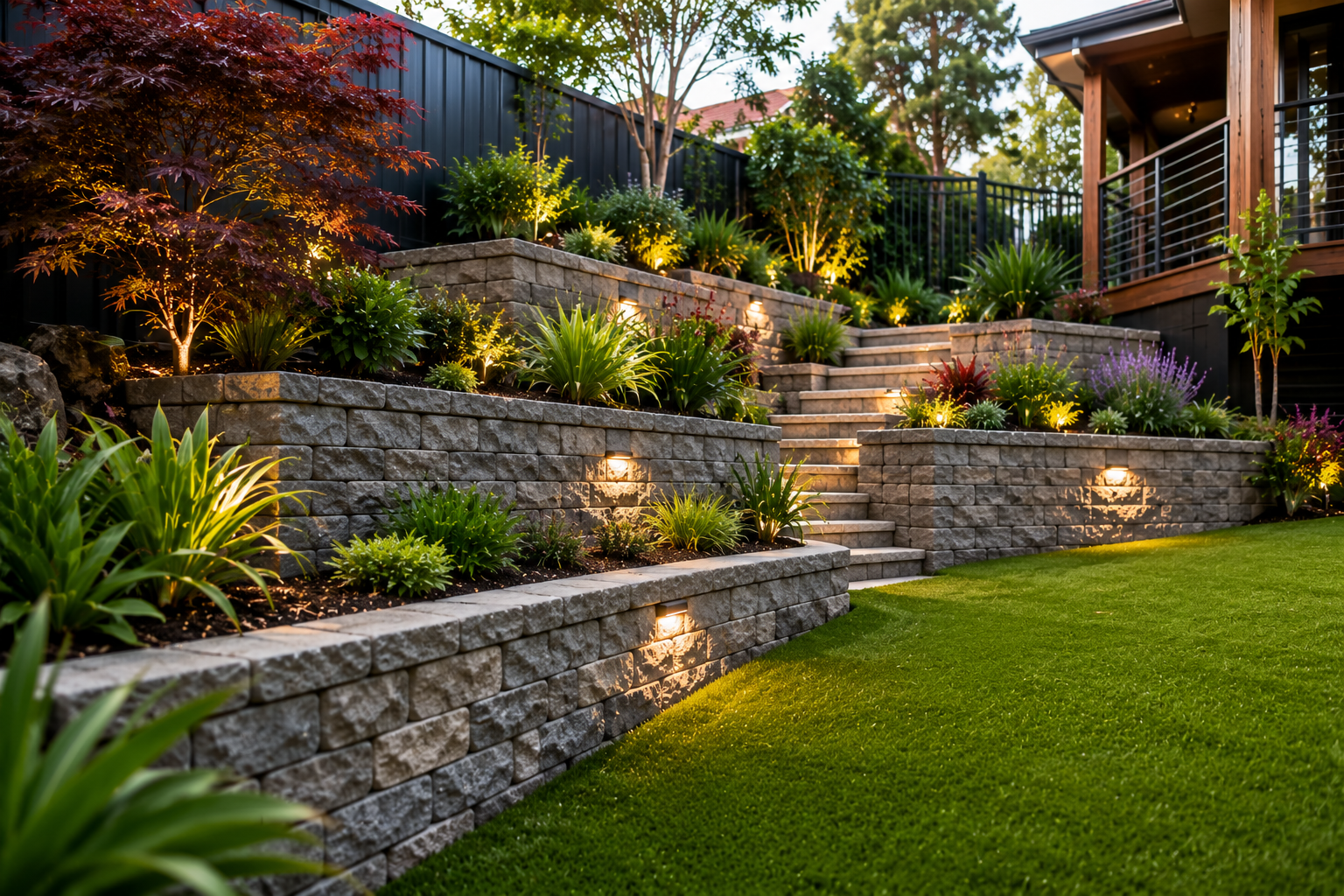
Understanding the Challenges of Sloped Gardens
Before looking at the benefits of retaining walls, it is important to understand the problems that sloped properties often face.
Soil Erosion
When rain falls on a sloped surface, water naturally flows downhill. Over time, this movement can wash away soil, leaving garden beds damaged and unstable.
Limited Usable Space
Steep slopes can make it difficult to create outdoor entertaining areas, lawns, vegetable gardens, or pathways.
Drainage Problems
Without proper management, water can collect in certain areas, creating muddy sections, damaging plants, and potentially affecting nearby structures.
Safety Concerns
Steep inclines can become slippery and difficult to navigate, especially for children, older family members, and visitors.
These issues often become more noticeable over time if left untreated.
What Is a Retaining Wall?
A retaining wall is a specially designed structure built to hold back soil and create level areas within a landscape.
Retaining walls are commonly constructed using:
- Timber sleepers
- Concrete sleepers
- Concrete blocks
- Natural stone
- Brick
The choice of material depends on the property's design, budget, and structural requirements.
The Main Purpose of Retaining Walls
The primary role of a retaining wall is to resist the pressure of soil behind it.
Without a retaining wall, gravity naturally causes soil to move downhill. This can lead to erosion, instability, and damage to landscaping features.
Retaining walls provide the support needed to keep soil in place while allowing homeowners to make better use of their outdoor space.
Retaining Walls Help Prevent Soil Erosion
One of the biggest benefits of retaining walls is erosion control.
When heavy rainfall occurs, loose soil can quickly wash away. This not only damages gardens but can also affect nearby paths, driveways, and structures.
Retaining walls create a barrier that helps:
- Stabilise soil
- Reduce surface runoff
- Protect plants and garden beds
- Minimise landscape damage
This is particularly important in areas that experience regular rainfall.
Creating More Usable Outdoor Space
Many homeowners with sloped gardens feel limited by the shape of their land.
Retaining walls allow you to transform steep slopes into level terraces that can be used for various purposes.
Examples include:
Outdoor Entertaining Areas
Retaining walls can help create flat spaces for patios, decks, pergolas, and outdoor dining areas.
Garden Beds
Level garden beds are easier to maintain and provide better growing conditions for plants.
Lawns
Terraced sections can create functional lawn areas for children and pets.
Pathways
Retaining walls make it easier to install safe and attractive garden pathways.
By dividing a slope into multiple levels, retaining walls maximise the usability of your property.
Improving Drainage Management
Water management is a critical part of any landscape design.
A professionally built retaining wall often includes drainage systems that help direct water away from vulnerable areas.
Benefits include:
- Reduced water pooling
- Less soil saturation
- Protection of nearby structures
- Improved plant health
Proper drainage helps prevent future problems that could become expensive to repair.
Increasing Property Safety
Steep slopes can create safety risks around the home.
Retaining walls help improve safety by:
- Preventing landslides and soil movement
- Creating level walking areas
- Supporting unstable ground
- Reducing slippery conditions
This makes the garden safer for family members and visitors.
Enhancing the Appearance of Your Garden
Retaining walls are not only practical but also highly decorative.
Modern retaining walls can become attractive landscape features that enhance the overall design of your outdoor space.
Design options include:
Timber Retaining Walls
Timber walls create a warm and natural appearance that blends well with gardens.
Concrete Sleeper Walls
Concrete sleepers offer a modern and durable solution with various finishes available.
Block Retaining Walls
Block walls provide a clean and structured look while offering exceptional strength.
A well designed retaining wall can become a focal point that improves the visual appeal of your property.
Supporting Plants and Landscaping Features
Plants often struggle on steep slopes because water and nutrients move quickly downhill.
Retaining walls create stable planting areas where soil remains in place and plants can thrive.
This makes it easier to establish:
- Flower beds
- Shrubs
- Vegetable gardens
- Feature trees
- Native plant landscapes
The result is a healthier and more attractive garden.
Increasing Property Value
Investing in retaining walls can add value to your home.
Potential buyers often appreciate:
- Better use of outdoor space
- Improved landscaping
- Reduced maintenance issues
- Enhanced visual appeal
- Increased safety
Retaining walls demonstrate that a property has been professionally managed and maintained.
Common Types of Retaining Walls for Residential Properties
Timber Sleeper Walls
Timber retaining walls are popular because they are affordable and blend naturally into garden environments.
They are often suitable for smaller retaining projects.
Concrete Sleeper Walls
Concrete sleepers offer exceptional durability and require very little maintenance.
They are ideal for larger projects where strength is important.
Block Retaining Walls
Block retaining walls provide both strength and design flexibility.
They can be used for simple garden walls or larger structural applications.
Choosing the right retaining wall depends on your property's needs and long term goals.
Signs Your Garden May Need a Retaining Wall
Not every sloped property requires a retaining wall, but there are several signs that suggest one may be beneficial.
Look out for:
- Visible soil erosion
- Water runoff problems
- Sloping areas that are difficult to use
- Cracked garden beds
- Exposed tree roots
- Drainage issues near structures
If any of these problems are present, a retaining wall could provide a practical solution.
Why Professional Installation Matters
Retaining walls are structural features that must be designed and built correctly.
Poorly constructed walls can fail over time, leading to costly repairs and potential safety risks.
Professional installation helps ensure:
- Proper engineering
- Effective drainage
- Long term stability
- Compliance with local regulations
- Quality workmanship
An experienced retaining wall specialist can assess the site and recommend the most suitable solution for your property.
Planning Your Retaining Wall Project
Before building a retaining wall, consider the following:
Purpose
Determine whether the wall is primarily for structural support, landscaping, or both.
Material Selection
Choose a material that suits your home's style and maintenance preferences.
Drainage Requirements
Ensure proper drainage is included in the design.
Budget
Different retaining wall materials and designs vary in cost.
Careful planning helps achieve the best result for both function and appearance.
To Sum Up
A good deck should do more than improve the appearance of a backyard. It should provide a safe, comfortable, and practical outdoor space that suits everyday life. Most decking mistakes happen when planning, structure, drainage, or maintenance is overlooked. By choosing the right size, suitable materials, proper support, and regular care, homeowners can enjoy a deck that remains attractive and functional for years. Professional decking services can also help remove uncertainty and ensure each stage is completed with care. Whether the project involves a new deck, an extension, or repairs to an existing structure, the right approach can protect the property and create an outdoor area that is easier to enjoy.


