
Quick Points to Consider
- Create a clear route from the house to the backyard
- Fix drainage and unstable surfaces before cosmetic work
- Choose one useful entertaining area instead of several small zones
- Use materials that suit Hobart’s changing weather
- Keep gardens attractive, simple and manageable
Start with a Clear Outdoor Plan
Questions to Ask Before You Start
- What daily problem will the improvement solve?
- Does the design suit the home’s style and available space?
- Have drainage, access and maintenance been included?
Features That Usually Appeal to Buyers
- Safe and attractive paths
- A practical entertaining area
- Tidy, manageable landscaping
- Well-maintained exterior surfaces
Look at the whole property before choosing a single feature. Map doors, windows, existing paths, sunny areas, shade, wind and water flow. Decide where people naturally walk and where furniture will fit without blocking access. A coordinated landscaping plan helps decks, paving, lawns and planting feel connected. It also reduces the risk of completing one job and later removing it to install drainage or another service.
Improve Street Appeal Without Overdoing It
The front garden creates the first impression. A clean path, trimmed planting, repaired fence, visible house number and tidy entrance can make the home feel better maintained. Use a simple planting palette rather than too many unrelated species. Fresh mulch and defined garden edges provide a finished appearance. If the exterior coating is faded or peeling, professional exterior painting can protect the surface while refreshing the façade.
Create an Outdoor Area People Will Actually Use
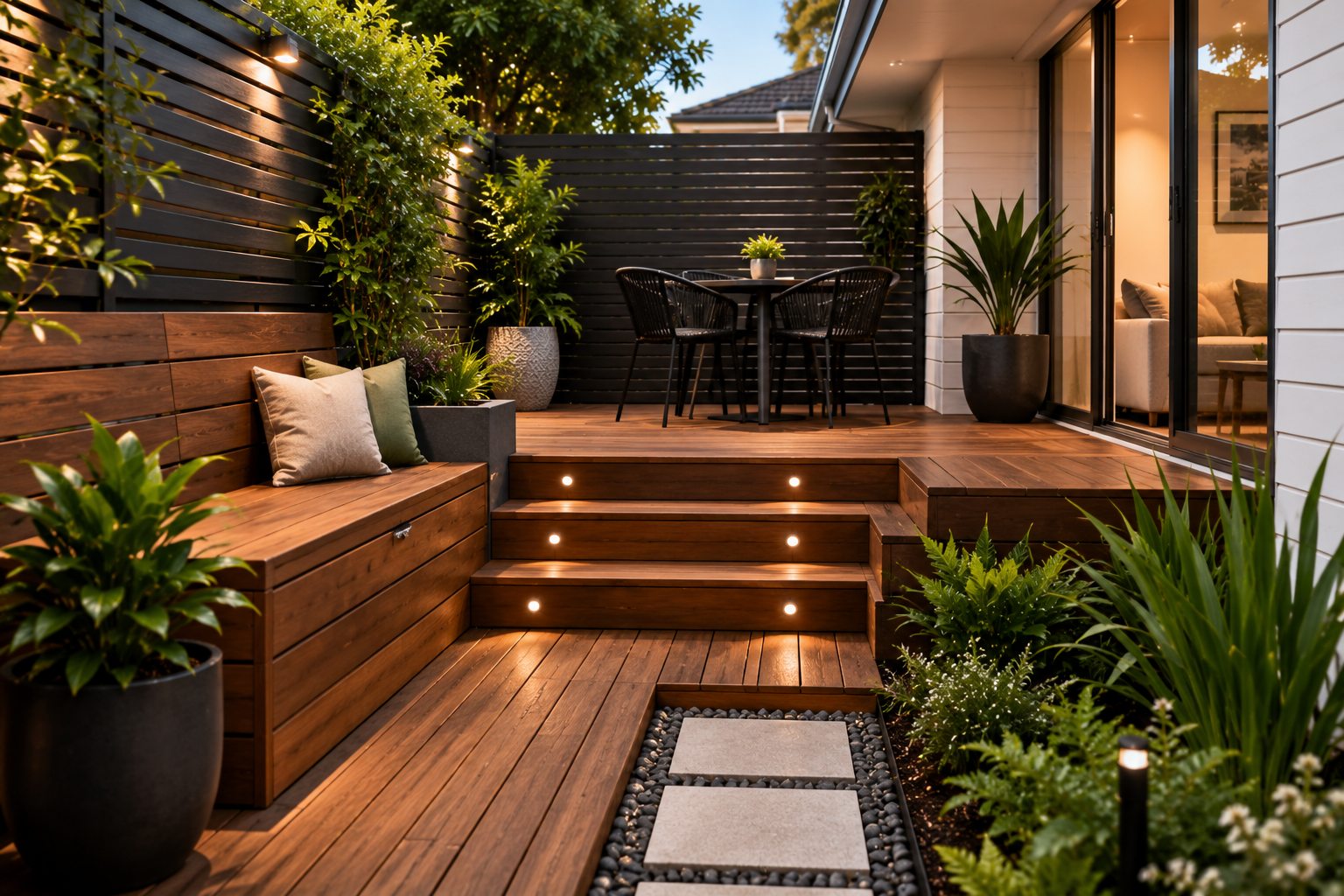
A deck or patio adds value when it is comfortable, accessible and large enough for its intended use. A deck may suit a raised doorway or sloping block, while concrete paving works well on prepared ground. Consider morning and afternoon sun, wind exposure, privacy and the route from the kitchen. Plan furniture dimensions early so the final space does not feel crowded.
Add Shade, Shelter and Privacy
Hobart weather can change quickly, so shelter may increase how often an outdoor area is used. A pergola can define an entertaining zone and support suitable roofing or screening. Privacy screens and carefully placed plants can reduce overlooking without making the garden dark. Always check boundaries and approval requirements before adding tall screens, roofs or structures.
Make Paths and Levels Safer
Uneven pavers, loose gravel and steep informal tracks can reduce both appearance and usability. Provide firm, well-drained access to sheds, clotheslines, bins and entertaining areas. On a slope, terraces, steps and retaining walls may create safer level zones. Structural work should be properly designed, with drainage included from the beginning.
Solve Drainage Before Adding New Finishes
Water that collects beside the house, under a deck or across a lawn can damage later improvements. Observe the garden during rain and check downpipes, pits, surface falls and low spots. The answer may involve grading, channels, subsoil drainage or improved soil, depending on the cause. Direct water only to a lawful discharge point and seek licensed advice when plumbing work is involved.
Choose Low-Maintenance Finishes Carefully
Low maintenance does not mean no maintenance. Composite decking still needs cleaning, artificial grass requires debris removal, and concrete may need sealing or repairs over time. Compare the full life of each material, not only the installation price. Select finishes that can be cleaned, repaired and matched later. Quality preparation normally matters more than a fashionable colour or product.
Use Lighting and Small Details Wisely
Simple lighting can improve safety at steps and entrances while making the garden pleasant in the evening. Choose restrained lighting that directs light where it is needed. Storage benches, a tidy bin area, a hose point and secure gates are modest improvements that support everyday use. These details rarely lead a renovation brief, but buyers notice when an outdoor space works smoothly.
Frequently Asked Questions
Which outdoor improvement adds the most value?
There is no single answer for every property. Safe access, good drainage and a useful entertaining area usually offer broader appeal than highly personal features. The best investment corrects an existing weakness and suits the home.
Should I build a deck or improve the garden first?
Complete drainage, excavation and major level changes first. The deck, paving and planting can then be designed around stable levels and clear water routes.
Do outdoor projects need approval in Hobart?
Some low-risk work may not require a building permit, but planning or other requirements can still apply. Check the current rules for the property, especially for structures, excavation, boundaries and retaining walls.
To Sum Up
Outdoor improvements can add value when they make a Hobart home safer, easier to maintain and more enjoyable to use. Start with essential work such as drainage, stable ground, secure access and repairs to damaged exterior surfaces. Once these issues are managed, consider practical additions such as a deck, patio, pergola, paved path or simple landscaping. Choose materials that suit Hobart’s changing weather and fit the style of the property. Avoid spending heavily on features that are too personal or difficult to maintain. A clear plan, quality preparation and well-finished work will usually create stronger long-term value than completing several disconnected projects without considering the whole outdoor area.


